Warehouse Management
ist nun doch unter SAP S/4HANA verfügbar


Holger Strichau
Project Manager
<style>
/* Webflow Blog Styles */
:root {
--content-max-width: 1500px;
--bg-color: #ffffff;
--font-sans: Inter, sans-serif;
--font-display: 'Mona Sans', sans-serif;
--font-sans-stretch: normal;
--font-display-stretch: normal;
}
.blog-content {
font-family: var(--font-sans);
font-stretch: var(--font-sans-stretch);
color: #000000;
line-height: 1.2;
}
figcaption, .video-caption {
font-family: 'Mona Sans', sans-serif;
font-stretch: normal;
font-size: 0.875rem;
font-weight: 500;
font-style: normal;
color: #000000;
line-height: 1.5;
letter-spacing: 0;
margin: 0.5rem 0 0 0;
text-align: center;
}
/* Image Widths and Galleries */
.offset-block {
padding-left: 50px;
}
.blog-content h1, .blog-content h2, .blog-content h3, .blog-content h4, .blog-content h5, .blog-content h6 {
font-family: var(--font-display);
font-stretch: var(--font-display-stretch);
}
.blog-content p a, .blog-content li a, .blog-content .text-link {
color: #f0567f;
text-decoration: underline;
font-weight: 500;
transition: color 0.2s ease;
}
.blog-content p a:hover, .blog-content li a:hover, .blog-content .text-link:hover {
color: #f0567f;
}
.blog-content h1 {
font-family: 'Mona Sans Expanded', sans-serif;
font-stretch: 125%;
font-size: 48px;
line-height: 1.2;
margin: 0 0 1rem 0;
color: #000000;
font-weight: 700;
letter-spacing: 0;
}
.blog-content h2 {
font-family: 'Mona Sans Expanded', sans-serif;
font-stretch: 125%;
font-size: 36px;
line-height: 1.2;
margin: 0 0 0.75rem 0;
color: #000000;
font-weight: 500;
letter-spacing: 0;
}
.blog-content h3 {
font-family: 'Mona Sans', sans-serif;
font-stretch: normal;
font-size: 26px;
line-height: 1.2;
margin: 0 0 0.5rem 0;
color: #000000;
font-weight: 700;
letter-spacing: 0;
}
.blog-content h4 {
font-family: 'Mona Sans', sans-serif;
font-stretch: normal;
font-size: 23px;
line-height: 1.1;
margin: 0 0 0.75rem 0;
color: #000000;
font-weight: 700;
letter-spacing: 0;
}
.blog-content h5 {
font-family: 'Mona Sans', sans-serif;
font-stretch: normal;
font-size: 23px;
line-height: 1.1;
margin: 0 0 0.75rem 0;
color: #000000;
font-weight: 700;
letter-spacing: 0;
}
.blog-content h6 {
font-family: 'Mona Sans', sans-serif;
font-stretch: normal;
font-size: 20px;
line-height: 1.2;
margin: 0 0 0.75rem 0;
color: #000000;
font-weight: 700;
letter-spacing: 0;
}
.blog-content .kpi-text {
font-family: 'Mona Sans', sans-serif;
font-stretch: normal;
font-size: 2.125rem;
line-height: 1.2;
margin: 0 0 1rem 0;
color: #000000;
font-weight: 700;
text-align: center;
}
.blog-content p {
font-family: 'Mona Sans', sans-serif;
font-stretch: normal;
font-size: 20px;
margin: 0 0 1rem 0;
line-height: 1.2;
color: #000000;
font-weight: 500;
}
.blog-content .text-bodyBold {
font-family: 'Mona Sans', sans-serif;
font-stretch: normal;
font-size: 20px;
margin: 0 0 1rem 0;
line-height: 1.2;
color: #000000;
font-weight: 700;
}
.blog-content ul {
font-family: 'Mona Sans', sans-serif;
font-stretch: normal;
font-size: 20px;
margin: 0 0 1rem 0;
line-height: 1.2;
color: #000000;
font-weight: 500;
}
.blog-content p a, .blog-content li a, .blog-content h1 a, .blog-content h2 a, .blog-content h3 a, .blog-content h4 a {
color: #f0567f;
text-decoration: underline;
font-weight: 500;
transition: all 0.2s ease-in-out;
}
.blog-content p a:hover, .blog-content li a:hover, .blog-content h1 a:hover, .blog-content h2 a:hover, .blog-content h3 a:hover, .blog-content h4 a:hover {
color: #f0567f;
}
.blog-content blockquote {
font-family: 'Mona Sans', sans-serif;
font-stretch: normal;
font-size: 22px;
font-style: italic;
font-weight: 400;
border-left: 0px solid #0066cc;
background-color: #f2f5f8;
padding: 0px;
margin: 1.5rem 0;
color: #000000;
}
.blog-content q {
font-family: 'Mona Sans', sans-serif;
font-stretch: normal;
font-size: 20px;
font-style: italic;
font-weight: 400;
border-left: 0px solid #94a3b8;
background-color: #f2f5f8;
padding: 0px;
quotes: "«" "»" "‹" "›";
color: #000000;
}
.custom-container {
max-width: var(--content-max-width);
margin: 0 auto;
padding: 60px 60px 70px 70px;
}
.custom-button:hover {
background-color: #fdc300 !important;
color: #000000 !important;
transform: scale(1.03) !important;
}
.faq-item {
border: 1px solid #e0e0e0;
border-radius: 8px;
padding: 15px;
margin-bottom: 1rem;
}
.faq-question {
font-weight: bold;
color: #1a1a1a;
margin-bottom: 0.5rem;
}
.faq-answer {
color: #333333;
}
.box-style-standard {
background-color: #ffffff;
border: 1px solid #e5e7eb;
border-radius: 8px;
padding: 20px;
color: #333333;
margin: 1.5rem 0;
}
.box-style-info {
background-color: #eff6ff;
border: 1px solid #3b82f6;
border-radius: 8px;
padding: 20px;
color: #1e40af;
margin: 1.5rem 0;
}
.box-style-warning {
background-color: #fffbeb;
border: 1px solid #f59e0b;
border-radius: 8px;
padding: 20px;
color: #92400e;
margin: 1.5rem 0;
}
@media (max-width: 991px) {
.offset-block { padding-left: 20px; }
.blog-content h1 { font-size: 44px; }
.blog-content h2 { font-size: 34px; }
.blog-content h3 { font-size: 24px; }
.blog-content h4 { font-size: 22px; }
.blog-content h5 { font-size: 22px; }
.blog-content h6 { font-size: 19px; }
.blog-content p { font-size: 18px; }
.blog-content .text-bodyBold { font-size: 18px; }
.blog-content ul { font-size: 19px; }
.blog-content .kpi-text { font-size: 1.8rem; }
.blog-content blockquote { font-size: 21px; }
.blog-content q { font-size: 19px; }
figcaption, .video-caption { font-size: 0.875rem; }
.custom-container { padding: 40px 40px 40px 40px; }
}
@media (max-width: 767px) {
.offset-block { padding-left: 15px; }
.blog-content h1 { font-size: 38px; }
.blog-content h2 { font-size: 28px; }
.blog-content h3 { font-size: 22px; }
.blog-content h4 { font-size: 21px; }
.blog-content h5 { font-size: 21px; }
.blog-content h6 { font-size: 18px; }
.blog-content p { font-size: 16px; }
.blog-content .text-bodyBold { font-size: 16px; }
.blog-content ul { font-size: 18px; }
.blog-content .kpi-text { font-size: 1.5rem; }
.blog-content blockquote { font-size: 20px; }
.blog-content q { font-size: 18px; }
figcaption, .video-caption { font-size: 0.875rem; }
.custom-container { padding: 15px 15px 15px 15px; }
}
/* Blog Lightbox */
.blog-lightbox-trigger { text-decoration: none !important; }
.blog-lightbox-trigger img { transition: opacity 0.2s ease; }
.blog-lightbox-trigger:hover img { opacity: 0.85; }
.blog-lightbox-overlay {
position: fixed; top: 0; left: 0; width: 100%; height: 100%;
background: rgba(0,0,0,0.85); z-index: 99999; display: flex;
align-items: center; justify-content: center; cursor: zoom-out;
animation: blogLbFadeIn 0.2s ease;
}
.blog-lightbox-overlay img {
max-width: 90vw; max-height: 90vh; border-radius: 8px;
box-shadow: 0 20px 60px rgba(0,0,0,0.5); object-fit: contain;
}
@keyframes blogLbFadeIn { from { opacity: 0; } to { opacity: 1; } }
</style>
<div class="blog-content">
<section style="background-color: #f2f5f8; width: 100%; margin-top: 0px; margin-bottom: 20px;">
<div class="custom-container" style="background-color: transparent;">
<div class="offset-block">
<p style="text-align: left;">Mit dem Wechsel auf SAP S/4HANA mussten Anwenderunternehmen bisher auch ihre Lagerwirtschaft auf Sicht neu ausrichten. Konkret hieß das: Sie mussten vom klassischen Warehouse Management (LE-WM) auf das mit SAP S/4HANA kompatible Extended Warehouse Management (SAP EWM) wechseln. Für diese Umstellung galt – wie auch für die Migration von SAP ERP ECC nach SAP S/4HANA – als Deadline das Jahr 2025.</p>
<p style="text-align: left;"><strong>SAP EWM ist aktuell noch für manche Kunden überdimensioniert<br></strong>Zwar bietet SAP EWM eine Vielzahl an zusätzlichen Funktionen wie mehrstufige Prozesse, größere Felder für Lagertypen und Lagerplätze, Ressourcenmanagement oder Funktionen für Shipping and Receiving, die in SAP LE-WM nicht enthalten sind – und ist damit eine der leistungsfähigsten Lösungen für die Lagerverwaltung und Lagersteuerung überhaupt. Dementsprechend aufwändig ist häufig die Einführung. Zudem möchten manche SAP-Kunden ihre Lagerverwaltung bewusst schlank halten und benötigen die zusätzlichen Funktionen nicht.</p>
</div>
<figure style="text-align: center; margin: 1.5rem 0;"><a href="https://cdn.prod.website-files.com/68ffbb1d2a6455e8202f8d3e/69dc3a3f834e217bfb645849_Blog_Grafik_Warehouse-Management-Optionen-in-SAP-S4HANA.png" class="blog-lightbox-trigger" onclick="event.preventDefault();var o=document.createElement('div');o.className='blog-lightbox-overlay';o.innerHTML='<img src="https://cdn.prod.website-files.com/68ffbb1d2a6455e8202f8d3e/69dc3a3f834e217bfb645849_Blog_Grafik_Warehouse-Management-Optionen-in-SAP-S4HANA.png" alt="">';o.onclick=function(){this.remove()};document.body.appendChild(o)" style="display: block; cursor: zoom-in;"><img src="https://cdn.prod.website-files.com/68ffbb1d2a6455e8202f8d3e/69dc3a3f834e217bfb645849_Blog_Grafik_Warehouse-Management-Optionen-in-SAP-S4HANA.png" alt="Unterschiedliche Lagerorte desselben Werks können über unterschiedliche Lagerszenarien abgebildet werden." class="blog-img-48a371aa-533e-47be-a02b-a312d03fd800" style="max-width: 100%; width: 100%; height: auto; border-radius: 8px; display: block; margin: 0 auto;"></a><figcaption>Unterschiedliche Lagerorte desselben Werks können über unterschiedliche Lagerszenarien abgebildet werden.</figcaption></figure>
<div class="offset-block">
<p style="text-align: left;"><strong>Stock Room Management ist SAP LE-WM „light“<br> </strong>Jetzt gibt es gute Nachrichten für SAP-Kunden, die mit grundlegenden Warehouse-Management-Funktionalitäten auskommen und nicht zwingend auf EWM wechseln wollen. Sie können das neue Stock Room Management, das ab dem Release 1909 in SAP S/4HANA enthalten ist, nutzen. Von den Funktionen entspricht SAP Stock Room Management fast vollständig dem klassischen Warehouse Management (SAP LE-WM). Einige wenige Funktionen aus LE-WM sind allerdings nicht enthalten:</p>
<ul style="padding-left: 1.5rem; list-style-type: disc;">
<li style="margin-bottom: 0.5rem;">Task & Resource Management (WM-TRM)</li>
<li style="margin-bottom: 0.5rem;">Warehouse Control Unit interface (WM-LSR)</li>
<li style="margin-bottom: 0.5rem;">Value Added Service (WM-VAS)</li>
<li style="margin-bottom: 0.5rem;">Yard Management (WM-YM)</li>
<li style="margin-bottom: 0.5rem;">Cross-Docking (WM-CD)</li>
<li style="margin-bottom: 0.5rem;">Wave Management (WM-TFM-CP)</li>
<li style="margin-bottom: 0.5rem;">Decentral WM (WM-DWM)</li>
</ul>
<p style="text-align: left;">Außerdem wird das Stock Room Management, genauso wie bisher das normale WM, funktional nicht weiterentwickelt. Das heißt: Alle Neuerungen stehen künftig nur in SAP EWM zur Verfügung – und EWM bleibt das strategische und von der SAP empfohlene Produkt für die Lagerverwaltung. Für Unternehmen, die nur die grundlegenden Funktionen von SAP LE-WM nutzen, ist Stock Room Management aber eine gute Alternative, die auch über das Jahr 2025 hinaus von SAP gewartet wird.</p>
<p style="text-align: left;"><strong>Kunden haben nun mehr Zeit für den Wechsel auf SAP EWM</strong><br> Auch Firmen, die prinzipiell auf SAP EWM wechseln möchten, können vom neuen Stock Room Management profitieren, denn sie haben Zeit für die Einführung der Lösung gewonnen. Denkbar ist, dass sie in einem ersten Schritt von SAP ERP auf SAP S/4HANA migrieren und hier zunächst das Stock Room Management nutzen und dann in einem separaten Projekt SAP EWM einführen. Das kann dann auch noch nach 2025 beginnen.</p>
</div>
<figure style="text-align: center; margin: 1.5rem 0;"><a href="https://cdn.prod.website-files.com/68ffbb1d2a6455e8202f8d3e/69dc3a413027a42e3a4913da_Blog_Grafik_Supply-Chain-Funktionen-in-SAP-S4HANA.png" class="blog-lightbox-trigger" onclick="event.preventDefault();var o=document.createElement('div');o.className='blog-lightbox-overlay';o.innerHTML='<img src="https://cdn.prod.website-files.com/68ffbb1d2a6455e8202f8d3e/69dc3a413027a42e3a4913da_Blog_Grafik_Supply-Chain-Funktionen-in-SAP-S4HANA.png" alt="">';o.onclick=function(){this.remove()};document.body.appendChild(o)" style="display: block; cursor: zoom-in;"><img src="https://cdn.prod.website-files.com/68ffbb1d2a6455e8202f8d3e/69dc3a413027a42e3a4913da_Blog_Grafik_Supply-Chain-Funktionen-in-SAP-S4HANA.png" alt="Kunden, die von SAP ERP mit LE-WM auf SAP S/4HANA umsteigen, verbleiben zunächst auf LE-WM und können sich danach zwischen zwei Optionen entscheiden." class="blog-img-124f64bb-08a1-48ba-a2a1-798b0524768d" style="max-width: 100%; width: 100%; height: auto; border-radius: 8px; display: block; margin: 0 auto;"></a><figcaption>Kunden, die von SAP ERP mit LE-WM auf SAP S/4HANA umsteigen, verbleiben zunächst auf LE-WM und können sich danach zwischen zwei Optionen entscheiden.</figcaption></figure>
<div class="offset-block">
<p style="text-align: left;"><strong>Unternehmen, die SAP WM für mehrere Lager nutzen, profitieren besonders<br></strong>Laut SAP sollen insbesondere die Unternehmen vom neuen Stock Room Management profitieren, die SAP ERP-Installationen inklusive SAP WM-Lagernummern nutzen und diese Lagernummern auch nach einem Umstieg auf SAP S/4HANA weiterhin nutzen müssen oder wollen – also solche Kunden, die mehrere oder viele Lager mit SAP WM im Betrieb haben. Denn für diese Firmen war die Tatsache, dass das klassische Warehouse Management in SAP S/4HANA nicht mehr verfügbar war, ein ungelöstes Problem. Nun können sie ihre Migrationsstrategie noch einmal neu ausrichten.</p>
</div>
</div>
</section>
</div>
Sie wollen keine News mehr verpassen? Dann abonnieren Sie unseren Newsletter:
Weitere Beiträge
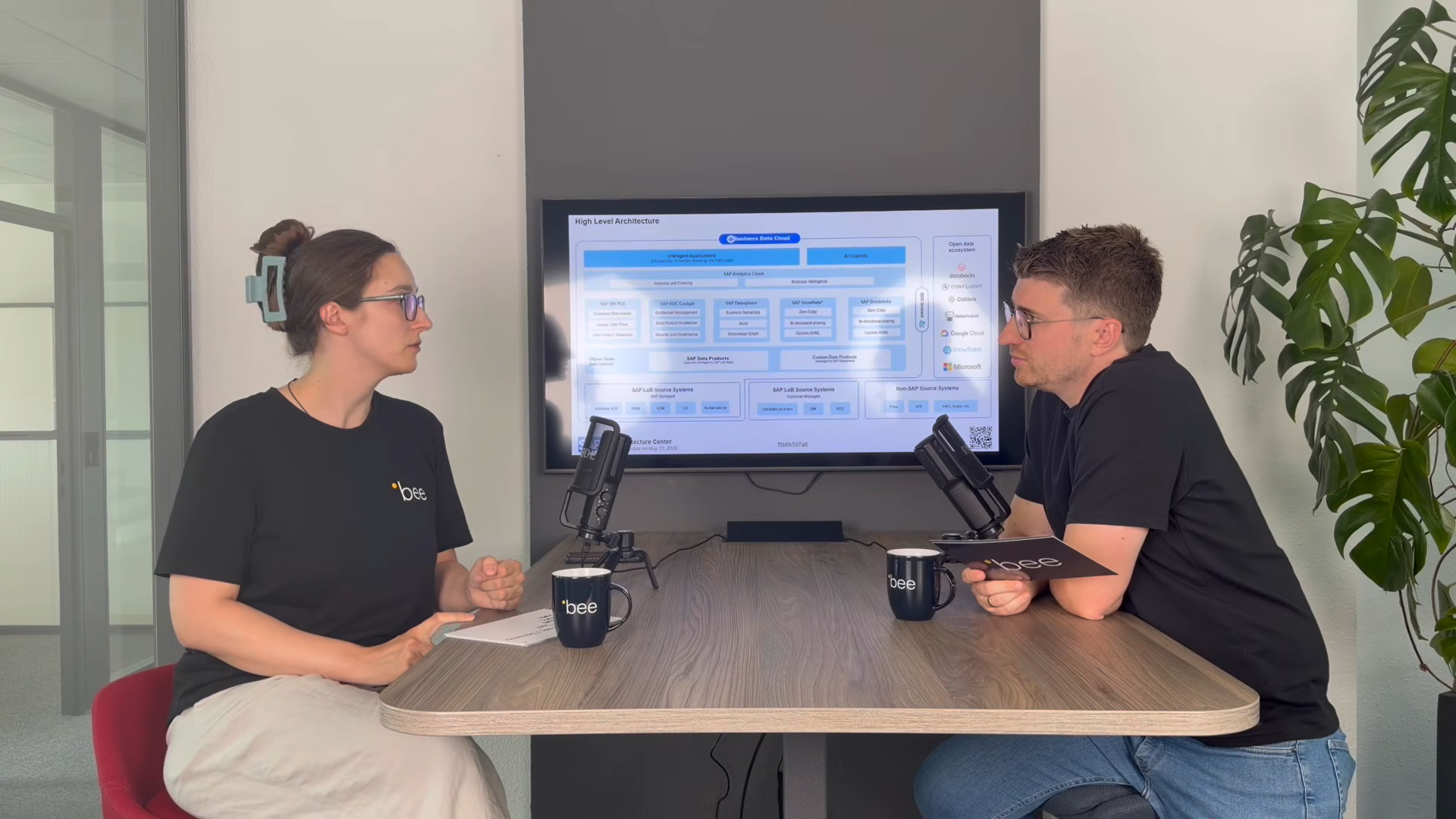
SAP Business Data Cloud
SAP Business Data Cloud: Plattform statt weiteres Tool
08.10.2026
|
SAP Cloud ERP

SAP Release-Upgrade bei Dallmayr
25.09.2026
|
Kundenreferenzen

Innovabee ist offizieller SAP-Concur-Implementierungspartner
16.09.2026
|
Innovabee