SAP stellt neues Preismodell
für SAP S/4HANA vor


Andreas Köhler
Geschäftsführer
<style>
/* Webflow Blog Styles */
:root {
--content-max-width: 1500px;
--bg-color: #ffffff;
--font-sans: Inter, sans-serif;
--font-display: 'Mona Sans', sans-serif;
--font-sans-stretch: normal;
--font-display-stretch: normal;
}
.blog-content {
font-family: var(--font-sans);
font-stretch: var(--font-sans-stretch);
color: #000000;
line-height: 1.2;
}
figcaption, .video-caption {
font-family: 'Mona Sans', sans-serif;
font-stretch: normal;
font-size: 0.875rem;
font-weight: 500;
font-style: normal;
color: #000000;
line-height: 1.5;
letter-spacing: 0;
margin: 0.5rem 0 0 0;
text-align: center;
}
/* Image Widths and Galleries */
.offset-block {
padding-left: 50px;
}
.blog-content h1, .blog-content h2, .blog-content h3, .blog-content h4, .blog-content h5, .blog-content h6 {
font-family: var(--font-display);
font-stretch: var(--font-display-stretch);
}
.blog-content p a, .blog-content li a, .blog-content .text-link {
color: #f0567f;
text-decoration: underline;
font-weight: 500;
transition: color 0.2s ease;
}
.blog-content p a:hover, .blog-content li a:hover, .blog-content .text-link:hover {
color: #f0567f;
}
.blog-content h1 {
font-family: 'Mona Sans Expanded', sans-serif;
font-stretch: 125%;
font-size: 48px;
line-height: 1.2;
margin: 0 0 1rem 0;
color: #000000;
font-weight: 700;
letter-spacing: 0;
}
.blog-content h2 {
font-family: 'Mona Sans Expanded', sans-serif;
font-stretch: 125%;
font-size: 36px;
line-height: 1.2;
margin: 0 0 0.75rem 0;
color: #000000;
font-weight: 500;
letter-spacing: 0;
}
.blog-content h3 {
font-family: 'Mona Sans', sans-serif;
font-stretch: normal;
font-size: 26px;
line-height: 1.2;
margin: 0 0 0.5rem 0;
color: #000000;
font-weight: 700;
letter-spacing: 0;
}
.blog-content h4 {
font-family: 'Mona Sans', sans-serif;
font-stretch: normal;
font-size: 23px;
line-height: 1.1;
margin: 0 0 0.75rem 0;
color: #000000;
font-weight: 700;
letter-spacing: 0;
}
.blog-content h5 {
font-family: 'Mona Sans', sans-serif;
font-stretch: normal;
font-size: 23px;
line-height: 1.1;
margin: 0 0 0.75rem 0;
color: #000000;
font-weight: 700;
letter-spacing: 0;
}
.blog-content h6 {
font-family: 'Mona Sans', sans-serif;
font-stretch: normal;
font-size: 20px;
line-height: 1.2;
margin: 0 0 0.75rem 0;
color: #000000;
font-weight: 700;
letter-spacing: 0;
}
.blog-content .kpi-text {
font-family: 'Mona Sans', sans-serif;
font-stretch: normal;
font-size: 2.125rem;
line-height: 1.2;
margin: 0 0 1rem 0;
color: #000000;
font-weight: 700;
text-align: center;
}
.blog-content p {
font-family: 'Mona Sans', sans-serif;
font-stretch: normal;
font-size: 20px;
margin: 0 0 1rem 0;
line-height: 1.2;
color: #000000;
font-weight: 500;
}
.blog-content .text-bodyBold {
font-family: 'Mona Sans', sans-serif;
font-stretch: normal;
font-size: 20px;
margin: 0 0 1rem 0;
line-height: 1.2;
color: #000000;
font-weight: 700;
}
.blog-content ul {
font-family: 'Mona Sans', sans-serif;
font-stretch: normal;
font-size: 20px;
margin: 0 0 1rem 0;
line-height: 1.2;
color: #000000;
font-weight: 500;
}
.blog-content p a, .blog-content li a, .blog-content h1 a, .blog-content h2 a, .blog-content h3 a, .blog-content h4 a {
color: #f0567f;
text-decoration: underline;
font-weight: 500;
transition: all 0.2s ease-in-out;
}
.blog-content p a:hover, .blog-content li a:hover, .blog-content h1 a:hover, .blog-content h2 a:hover, .blog-content h3 a:hover, .blog-content h4 a:hover {
color: #f0567f;
}
.blog-content blockquote {
font-family: 'Mona Sans', sans-serif;
font-stretch: normal;
font-size: 22px;
font-style: italic;
font-weight: 400;
border-left: 0px solid #0066cc;
background-color: #f2f5f8;
padding: 0px;
margin: 1.5rem 0;
color: #000000;
}
.blog-content q {
font-family: 'Mona Sans', sans-serif;
font-stretch: normal;
font-size: 20px;
font-style: italic;
font-weight: 400;
border-left: 0px solid #94a3b8;
background-color: #f2f5f8;
padding: 0px;
quotes: "«" "»" "‹" "›";
color: #000000;
}
.custom-container {
max-width: var(--content-max-width);
margin: 0 auto;
padding: 60px 60px 70px 70px;
}
.custom-button:hover {
background-color: #fdc300 !important;
color: #000000 !important;
transform: scale(1.03) !important;
}
.faq-item {
border: 1px solid #e0e0e0;
border-radius: 8px;
padding: 15px;
margin-bottom: 1rem;
}
.faq-question {
font-weight: bold;
color: #1a1a1a;
margin-bottom: 0.5rem;
}
.faq-answer {
color: #333333;
}
.box-style-standard {
background-color: #ffffff;
border: 1px solid #e5e7eb;
border-radius: 8px;
padding: 20px;
color: #333333;
margin: 1.5rem 0;
}
.box-style-info {
background-color: #eff6ff;
border: 1px solid #3b82f6;
border-radius: 8px;
padding: 20px;
color: #1e40af;
margin: 1.5rem 0;
}
.box-style-warning {
background-color: #fffbeb;
border: 1px solid #f59e0b;
border-radius: 8px;
padding: 20px;
color: #92400e;
margin: 1.5rem 0;
}
@media (max-width: 991px) {
.offset-block { padding-left: 20px; }
.blog-content h1 { font-size: 44px; }
.blog-content h2 { font-size: 34px; }
.blog-content h3 { font-size: 24px; }
.blog-content h4 { font-size: 22px; }
.blog-content h5 { font-size: 22px; }
.blog-content h6 { font-size: 19px; }
.blog-content p { font-size: 18px; }
.blog-content .text-bodyBold { font-size: 18px; }
.blog-content ul { font-size: 19px; }
.blog-content .kpi-text { font-size: 1.8rem; }
.blog-content blockquote { font-size: 21px; }
.blog-content q { font-size: 19px; }
figcaption, .video-caption { font-size: 0.875rem; }
.custom-container { padding: 40px 40px 40px 40px; }
}
@media (max-width: 767px) {
.offset-block { padding-left: 15px; }
.blog-content h1 { font-size: 38px; }
.blog-content h2 { font-size: 28px; }
.blog-content h3 { font-size: 22px; }
.blog-content h4 { font-size: 21px; }
.blog-content h5 { font-size: 21px; }
.blog-content h6 { font-size: 18px; }
.blog-content p { font-size: 16px; }
.blog-content .text-bodyBold { font-size: 16px; }
.blog-content ul { font-size: 18px; }
.blog-content .kpi-text { font-size: 1.5rem; }
.blog-content blockquote { font-size: 20px; }
.blog-content q { font-size: 18px; }
figcaption, .video-caption { font-size: 0.875rem; }
.custom-container { padding: 15px 15px 15px 15px; }
}
/* Blog Lightbox */
.blog-lightbox-trigger { text-decoration: none !important; }
.blog-lightbox-trigger img { transition: opacity 0.2s ease; }
.blog-lightbox-trigger:hover img { opacity: 0.85; }
.blog-lightbox-overlay {
position: fixed; top: 0; left: 0; width: 100%; height: 100%;
background: rgba(0,0,0,0.85); z-index: 99999; display: flex;
align-items: center; justify-content: center; cursor: zoom-out;
animation: blogLbFadeIn 0.2s ease;
}
.blog-lightbox-overlay img {
max-width: 90vw; max-height: 90vh; border-radius: 8px;
box-shadow: 0 20px 60px rgba(0,0,0,0.5); object-fit: contain;
}
@keyframes blogLbFadeIn { from { opacity: 0; } to { opacity: 1; } }
</style>
<div class="blog-content">
<section style="background-color: #f2f5f8; width: 100%; margin-top: 0px; margin-bottom: 20px;">
<div class="custom-container" style="background-color: transparent;">
<div class="offset-block">
<p style="text-align: left;">Bisher orientierte sich das Lizenzmodell für SAP ERP und <a href="https://innovabee.de/sap-loesungen/sap-s4hana/">SAP S/4HANA</a> an der Zahl der Nutzer (User-basiert). Seit einiger Zeit nutzen aber nicht mehr nur User von SAP-Anwenderunternehmen ihre jeweils eigenen SAP-Systeme. Auch Geschäftspartner und Endkunden, Anwendungen von Drittanbietern und IoT-Geräte, Bots und automatisierte Systeme greifen auf den digitalen Kern von SAP zu. In einem solchen Fall – also immer dann, wenn ein Anwender, ein Gerät oder eine Software auf ein SAP-System zugreift, ohne sich selbst im System anzumelden, sprechen wir von indirektem Zugriff.</p>
</div>
</div>
</section>
<section style="background-color: #f2f5f8; width: 100%; margin-top: 0px; margin-bottom: 20px;">
<div class="custom-container" style="background-color: transparent;">
<div class="offset-block">
<h2 style="text-align: left;">Neues S/4HANA Lizenzmodell unterscheidet zwischen direktem und indirektem Zugriff</h2>
<p style="text-align: left;">Weil aufgrund dieser Entwicklung nicht immer klar war, welche und wie viele Lizenzen notwendig sind, hat die SAP ein neues Preismodell entwickelt, das zwischen direktem oder menschlichem Zugriff einerseits und indirektem oder digitalem Zugriff andererseits unterscheidet. Der neue Ansatz soll dafür sorgen, dass Kunden ihre <strong>SAP-Lizenzen</strong> künftig leichter und transparenter nutzen können.</p>
</div>
<figure style="text-align: center; margin: 1.5rem 0;"><a href="https://cdn.prod.website-files.com/68ffbb1d2a6455e8202f8d3e/69dc3c6b1cbdf122428922cf_Blog_Grafik_Neues-Preismodell_1.png" class="blog-lightbox-trigger" onclick="event.preventDefault();var o=document.createElement('div');o.className='blog-lightbox-overlay';o.innerHTML='<img src="https://cdn.prod.website-files.com/68ffbb1d2a6455e8202f8d3e/69dc3c6b1cbdf122428922cf_Blog_Grafik_Neues-Preismodell_1.png" alt="">';o.onclick=function(){this.remove()};document.body.appendChild(o)" style="display: block; cursor: zoom-in;"><img src="https://cdn.prod.website-files.com/68ffbb1d2a6455e8202f8d3e/69dc3c6b1cbdf122428922cf_Blog_Grafik_Neues-Preismodell_1.png" alt="Das neue Lizenzmodell orientiert sich an den vom System verarbeiteten Transaktionen und Dokumenten (Outcome-basiert)." class="blog-img-1e1804b2-d62d-4d3b-854c-22c305029116" style="max-width: 100%; width: 100%; height: auto; border-radius: 8px; display: block; margin: 0 auto;"></a><figcaption>Das neue Lizenzmodell orientiert sich an den vom System verarbeiteten Transaktionen und Dokumenten (Outcome-basiert).</figcaption></figure>
</div>
</section>
<section style="background-color: #f2f5f8; width: 100%; margin-top: 0px; margin-bottom: 20px;">
<div class="custom-container" style="background-color: transparent;">
<div class="offset-block">
<h2 style="text-align: left;">Lesen und Aktualisieren von SAP-Dokumenten bleibt kostenfei</h2>
<p style="text-align: left;">Die gute Nachricht ist: Nach wie vor können sowohl SAP-Anwenderunternehmen als auch Geräte oder Anwender, die von außen auf das SAP-System zugreifen, dies völlig kostenlos tun. Das Lesen, Aktualisieren und Löschen von bestehenden Dokumenten bleibt komplett kostenfrei. Auch wenn ein User von einer anderen SAP-Lösung, zum Beispiel einer <a href="https://innovabee.de/sap-branchenloesungen/">SAP Branchenlösung</a> oder einer Lösungserweiterung, auf SAP S/4HANA zugreift, fallen keine zusätzlichen Gebühren an – vorausgesetzt, das Unternehmen hat die SAP-Lösung korrekt lizenziert. Erst wenn eine Transaktion aus einem anderen System, zum Beispiel einem Webshop oder einem CRM-System, in das SAP-System übernommen wird, fallen Gebühren an.</p>
</div>
</div>
</section>
<section style="background-color: #f2f5f8; width: 100%; margin-top: 0px; margin-bottom: 20px;">
<div class="custom-container" style="background-color: transparent;">
<div class="offset-block">
<h2 style="text-align: left;">Klare Preislisten für Lizenzierung, Nutzung und Compliance</h2>
<ul style="padding-left: 1.5rem; list-style-type: disc;">
<li style="margin-bottom: 0.5rem;"><strong>Direktem Zugriff/Human Access</strong>. Direkter Zugriff erfolgt dabei, wenn ein Nutzer auf den digitalen Kern von SAP zugreift.</li>
<li style="margin-bottom: 0.5rem;"><strong>Indirektem Zugriff/Digital Access.</strong> Indirekter Zugriff erfolgt, wenn Geräte, Bots oder automatisierte Systeme auf den digitalen Kern zugreifen oder wenn Personen, Geräte oder Systeme den digitalen Kern indirekt über eine zwischengeschaltete Software eines anderen Anbieters nutzen – zum Beispiel ein Nicht-SAP-Frontend, eine eigenentwickelte Kundenlösung oder die Anwendung eines Drittanbieters.</li>
</ul>
</div>
<figure style="text-align: center; margin: 1.5rem 0;"><a href="https://cdn.prod.website-files.com/68ffbb1d2a6455e8202f8d3e/69dc3c6fcc2f7444df470458_Blog_Grafik_Neues-Preismodell_2.png" class="blog-lightbox-trigger" onclick="event.preventDefault();var o=document.createElement('div');o.className='blog-lightbox-overlay';o.innerHTML='<img src="https://cdn.prod.website-files.com/68ffbb1d2a6455e8202f8d3e/69dc3c6fcc2f7444df470458_Blog_Grafik_Neues-Preismodell_2.png" alt="">';o.onclick=function(){this.remove()};document.body.appendChild(o)" style="display: block; cursor: zoom-in;"><img src="https://cdn.prod.website-files.com/68ffbb1d2a6455e8202f8d3e/69dc3c6fcc2f7444df470458_Blog_Grafik_Neues-Preismodell_2.png" alt="Anwenderunternehmen können selbst entscheiden, ob sie auf das neue Preismodell wechseln oder weiterhin User-basiert abrechnen wollen." class="blog-img-a6619214-4726-4fa9-8b1b-6b3c392f10ed" style="max-width: 100%; width: 100%; height: auto; border-radius: 8px; display: block; margin: 0 auto;"></a><figcaption>Anwenderunternehmen können selbst entscheiden, ob sie auf das neue Preismodell wechseln oder weiterhin User-basiert abrechnen wollen.</figcaption></figure>
</div>
</section>
<section style="background-color: #f2f5f8; width: 100%; margin-top: 0px; margin-bottom: 20px;">
<div class="custom-container" style="background-color: transparent;">
<div class="offset-block">
<h2 style="text-align: left;">SAP-Kunden haben die Wahl zwischen altem und neuem Preismodell</h2>
<p style="text-align: left;">Gültig ist das neue SAP-Modell sowohl für den digitalen Kern – also <a href="https://innovabee.de/sap-loesungen/sap-s4hana/">SAP S/4HANA</a> und <a href="https://innovabee.de/sap-loesungen/sap-s4hana-cloud/">SAP S/4HANA Cloud</a> – als auch für SAP ERP. Bestandskunden können wahlweise beim bisherigen Modell bleiben oder auf das neue, dokumentenbasierte Preismodell wechseln – je nachdem, welches Modell besser zu ihren SAP- und Drittanwendungen passt. Kunden, die das neue Preismodell bevorzugen, bietet die SAP spezielle Konversionsangebote, mit deren Hilfe sie vom bestehenden auf das neue Preismodell wechseln können.</p>
</div>
<div style="text-align: center;"><div style="position: relative; width: 100%; padding-bottom: 56.25%; overflow: hidden; border-radius: 8px; margin: 1.5rem 0;">
<iframe src="https://www.youtube-nocookie.com/embed/_zZARf5SxZg?feature=oembed" style="position: absolute; top: 0; left: 0; width: 100%; height: 100%; border: none;" allow="accelerometer; autoplay; clipboard-write; encrypted-media; gyroscope; picture-in-picture" allowfullscreen></iframe>
</div></div>
<div class="offset-block">
<p style="text-align: left;">Video: ERP Pricing for the Digital Age (eng.)</p>
</div>
</div>
</section>
</div>
Sie wollen keine News mehr verpassen? Dann abonnieren Sie unseren Newsletter:
Weitere Beiträge
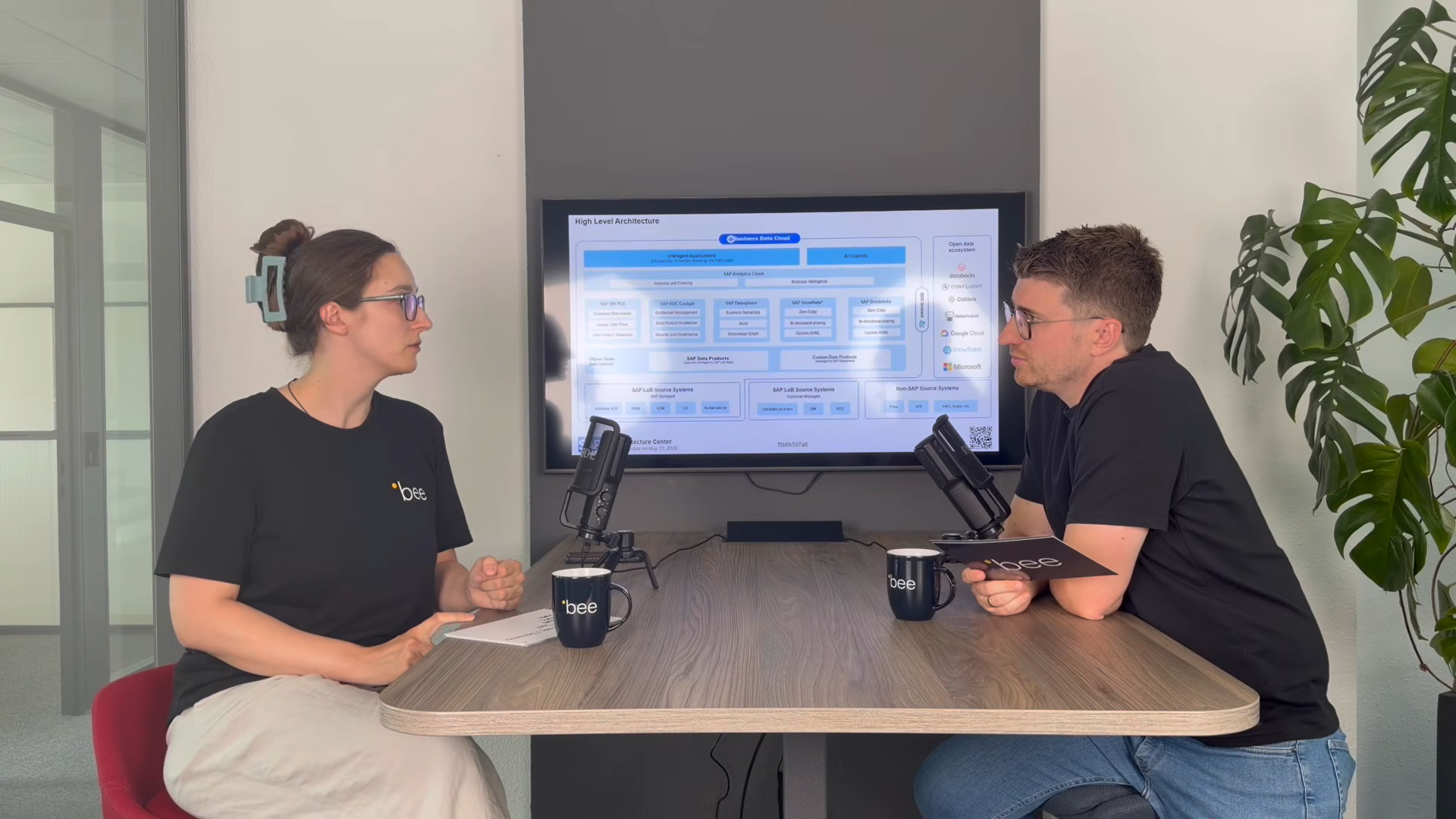
SAP Business Data Cloud
SAP Business Data Cloud: Plattform statt weiteres Tool
08.10.2026
|
SAP Cloud ERP

SAP Release-Upgrade bei Dallmayr
25.09.2026
|
Kundenreferenzen

Innovabee ist offizieller SAP-Concur-Implementierungspartner
16.09.2026
|
Innovabee