Endspurt für SAP S/4HANA on premise Kunden:
SAP verlängert den Übergangszeitraum für die S/4HANA Compatibility Packs bis Mai 2026

<style>
/* Webflow Blog Styles */
:root {
--content-max-width: 1500px;
--bg-color: #ffffff;
--font-sans: Inter, sans-serif;
--font-display: 'Mona Sans', sans-serif;
--font-sans-stretch: normal;
--font-display-stretch: normal;
}
.blog-content {
font-family: var(--font-sans);
font-stretch: var(--font-sans-stretch);
color: #000000;
line-height: 1.2;
}
figcaption, .video-caption {
font-family: 'Mona Sans', sans-serif;
font-stretch: normal;
font-size: 0.875rem;
font-weight: 500;
font-style: normal;
color: #000000;
line-height: 1.5;
letter-spacing: 0;
margin: 0.5rem 0 0 0;
text-align: center;
}
/* Image Widths and Galleries */
.offset-block {
padding-left: 50px;
}
.blog-content h1, .blog-content h2, .blog-content h3, .blog-content h4, .blog-content h5, .blog-content h6 {
font-family: var(--font-display);
font-stretch: var(--font-display-stretch);
}
.blog-content p a, .blog-content li a, .blog-content .text-link {
color: #f0567f;
text-decoration: underline;
font-weight: 500;
transition: color 0.2s ease;
}
.blog-content p a:hover, .blog-content li a:hover, .blog-content .text-link:hover {
color: #f0567f;
}
.blog-content h1 {
font-family: 'Mona Sans Expanded', sans-serif;
font-stretch: 125%;
font-size: 48px;
line-height: 1.2;
margin: 0 0 1rem 0;
color: #000000;
font-weight: 700;
letter-spacing: 0;
}
.blog-content h2 {
font-family: 'Mona Sans Expanded', sans-serif;
font-stretch: 125%;
font-size: 36px;
line-height: 1.2;
margin: 0 0 0.75rem 0;
color: #000000;
font-weight: 500;
letter-spacing: 0;
}
.blog-content h3 {
font-family: 'Mona Sans', sans-serif;
font-stretch: normal;
font-size: 26px;
line-height: 1.2;
margin: 0 0 0.5rem 0;
color: #000000;
font-weight: 700;
letter-spacing: 0;
}
.blog-content h4 {
font-family: 'Mona Sans', sans-serif;
font-stretch: normal;
font-size: 23px;
line-height: 1.1;
margin: 0 0 0.75rem 0;
color: #000000;
font-weight: 700;
letter-spacing: 0;
}
.blog-content h5 {
font-family: 'Mona Sans', sans-serif;
font-stretch: normal;
font-size: 23px;
line-height: 1.1;
margin: 0 0 0.75rem 0;
color: #000000;
font-weight: 700;
letter-spacing: 0;
}
.blog-content h6 {
font-family: 'Mona Sans', sans-serif;
font-stretch: normal;
font-size: 20px;
line-height: 1.2;
margin: 0 0 0.75rem 0;
color: #000000;
font-weight: 700;
letter-spacing: 0;
}
.blog-content .kpi-text {
font-family: 'Mona Sans', sans-serif;
font-stretch: normal;
font-size: 2.125rem;
line-height: 1.2;
margin: 0 0 1rem 0;
color: #000000;
font-weight: 700;
text-align: center;
}
.blog-content p {
font-family: 'Mona Sans', sans-serif;
font-stretch: normal;
font-size: 20px;
margin: 0 0 1rem 0;
line-height: 1.2;
color: #000000;
font-weight: 500;
}
.blog-content .text-bodyBold {
font-family: 'Mona Sans', sans-serif;
font-stretch: normal;
font-size: 20px;
margin: 0 0 1rem 0;
line-height: 1.2;
color: #000000;
font-weight: 700;
}
.blog-content ul {
font-family: 'Mona Sans', sans-serif;
font-stretch: normal;
font-size: 20px;
margin: 0 0 1rem 0;
line-height: 1.2;
color: #000000;
font-weight: 500;
}
.blog-content p a, .blog-content li a, .blog-content h1 a, .blog-content h2 a, .blog-content h3 a, .blog-content h4 a {
color: #f0567f;
text-decoration: underline;
font-weight: 500;
transition: all 0.2s ease-in-out;
}
.blog-content p a:hover, .blog-content li a:hover, .blog-content h1 a:hover, .blog-content h2 a:hover, .blog-content h3 a:hover, .blog-content h4 a:hover {
color: #f0567f;
}
.blog-content blockquote {
font-family: 'Mona Sans', sans-serif;
font-stretch: normal;
font-size: 22px;
font-style: italic;
font-weight: 400;
border-left: 0px solid #0066cc;
background-color: #f2f5f8;
padding: 0px;
margin: 1.5rem 0;
color: #000000;
}
.blog-content q {
font-family: 'Mona Sans', sans-serif;
font-stretch: normal;
font-size: 20px;
font-style: italic;
font-weight: 400;
border-left: 0px solid #94a3b8;
background-color: #f2f5f8;
padding: 0px;
quotes: "«" "»" "‹" "›";
color: #000000;
}
.custom-container {
max-width: var(--content-max-width);
margin: 0 auto;
padding: 60px 60px 70px 70px;
}
.custom-button:hover {
background-color: #fdc300 !important;
color: #000000 !important;
transform: scale(1.03) !important;
}
.faq-item {
border: 1px solid #e0e0e0;
border-radius: 8px;
padding: 15px;
margin-bottom: 1rem;
}
.faq-question {
font-weight: bold;
color: #1a1a1a;
margin-bottom: 0.5rem;
}
.faq-answer {
color: #333333;
}
.box-style-standard {
background-color: #ffffff;
border: 1px solid #e5e7eb;
border-radius: 8px;
padding: 20px;
color: #333333;
margin: 1.5rem 0;
}
.box-style-info {
background-color: #eff6ff;
border: 1px solid #3b82f6;
border-radius: 8px;
padding: 20px;
color: #1e40af;
margin: 1.5rem 0;
}
.box-style-warning {
background-color: #fffbeb;
border: 1px solid #f59e0b;
border-radius: 8px;
padding: 20px;
color: #92400e;
margin: 1.5rem 0;
}
@media (max-width: 991px) {
.offset-block { padding-left: 20px; }
.blog-content h1 { font-size: 44px; }
.blog-content h2 { font-size: 34px; }
.blog-content h3 { font-size: 24px; }
.blog-content h4 { font-size: 22px; }
.blog-content h5 { font-size: 22px; }
.blog-content h6 { font-size: 19px; }
.blog-content p { font-size: 18px; }
.blog-content .text-bodyBold { font-size: 18px; }
.blog-content ul { font-size: 19px; }
.blog-content .kpi-text { font-size: 1.8rem; }
.blog-content blockquote { font-size: 21px; }
.blog-content q { font-size: 19px; }
figcaption, .video-caption { font-size: 0.875rem; }
.custom-container { padding: 40px 40px 40px 40px; }
}
@media (max-width: 767px) {
.offset-block { padding-left: 15px; }
.blog-content h1 { font-size: 38px; }
.blog-content h2 { font-size: 28px; }
.blog-content h3 { font-size: 22px; }
.blog-content h4 { font-size: 21px; }
.blog-content h5 { font-size: 21px; }
.blog-content h6 { font-size: 18px; }
.blog-content p { font-size: 16px; }
.blog-content .text-bodyBold { font-size: 16px; }
.blog-content ul { font-size: 18px; }
.blog-content .kpi-text { font-size: 1.5rem; }
.blog-content blockquote { font-size: 20px; }
.blog-content q { font-size: 18px; }
figcaption, .video-caption { font-size: 0.875rem; }
.custom-container { padding: 15px 15px 15px 15px; }
}
/* Blog Lightbox */
.blog-lightbox-trigger { text-decoration: none !important; }
.blog-lightbox-trigger img { transition: opacity 0.2s ease; }
.blog-lightbox-trigger:hover img { opacity: 0.85; }
.blog-lightbox-overlay {
position: fixed; top: 0; left: 0; width: 100%; height: 100%;
background: rgba(0,0,0,0.85); z-index: 99999; display: flex;
align-items: center; justify-content: center; cursor: zoom-out;
animation: blogLbFadeIn 0.2s ease;
}
.blog-lightbox-overlay img {
max-width: 90vw; max-height: 90vh; border-radius: 8px;
box-shadow: 0 20px 60px rgba(0,0,0,0.5); object-fit: contain;
}
@keyframes blogLbFadeIn { from { opacity: 0; } to { opacity: 1; } }
</style>
<div class="blog-content">
<section style="background-color: #f2f5f8; width: 100%; margin-top: 0px; margin-bottom: 20px;">
<div class="custom-container" style="background-color: transparent;">
<div class="offset-block">
<p style="text-align: left;">Nach intensiver Kommunikation und jahrelanger Vorbereitung hat SAP noch einmal Bewegung in die S/4HANA-Transformation gebracht: Im SAP News Center hat das Unternehmen offiziell einen finalen Übergangszeitraum für die sogenannten <em>Compatibility Packs</em> angekündigt. Die ursprünglich auf den 31. Dezember 2025 terminierte Frist wird um fünf Monate bis <strong>Ende Mai 2026</strong> ausgedehnt – ein letztes Zugeständnis für SAP S/4HANA on premise Kunden, die noch nicht vollständig auf native S/4HANA-Funktionalitäten oder cloudbasierte Lösungen migriert sind.</p>
<p style="text-align: left;">Die SAP <em>Compatibility Packs</em> sind temporäre Nutzungsrechte, die bestimmte klassische SAP-ERP-Funktionen innerhalb eines SAP S/4HANA-Systems weiterlaufen lassen. Sie wurden eingeführt, um Unternehmen einen sanften Übergang von SAP ERP ECC nach S/4HANA zu ermöglichen und zugleich die Geschäftskontinuität zu sichern.</p>
<p style="text-align: left;">SAP hat diese finale Fristverlängerung bewusst als einmalige Möglichkeit positioniert. Zwar erkennen viele Unternehmen an, dass die Umstellung auf native S/4HANA-Funktionen komplex ist, doch die Botschaft ist klar: <strong>Nach Mai 2026 endet die Ära der <em>Compatibility Packs</em> endgültig.</strong> Weiteres Aufschieben ist nicht vorgesehen.</p>
</div>
<figure style="text-align: center; margin: 1.5rem 0;"><a href="https://cdn.prod.website-files.com/68ffbb1d2a6455e8202f8d3e/69d48beb73341f30be7e3ac9_SAP-End-of-Compatiblity-Scope-Use-Rights-1.png" class="blog-lightbox-trigger" onclick="event.preventDefault();var o=document.createElement('div');o.className='blog-lightbox-overlay';o.innerHTML='<img src="https://cdn.prod.website-files.com/68ffbb1d2a6455e8202f8d3e/69d48beb73341f30be7e3ac9_SAP-End-of-Compatiblity-Scope-Use-Rights-1.png" alt="">';o.onclick=function(){this.remove()};document.body.appendChild(o)" style="display: block; cursor: zoom-in;"><img src="https://cdn.prod.website-files.com/68ffbb1d2a6455e8202f8d3e/69d48beb73341f30be7e3ac9_SAP-End-of-Compatiblity-Scope-Use-Rights-1.png" alt="<em>Überblick der Laufzeit der SAP S/4HANA Compatibility Packs nach Art des Scope Items <br></em><em>(Quelle: SAP SE)</em>" class="blog-img-f5dbc43b-019a-47fa-a419-ab356eb70bab" style="max-width: 100%; width: 100%; height: auto; border-radius: 8px; display: block; margin: 0 auto;"></a><figcaption><em>Überblick der Laufzeit der SAP S/4HANA Compatibility Packs nach Art des Scope Items <br></em><em>(Quelle: SAP SE)</em></figcaption></figure>
<div class="offset-block">
<p style="text-align: left;">Für Unternehmen, die ihre <strong>SAP S/4HANA-Systeme im Rahmen eines Cloud-Abonnementvertrags betreiben</strong> oder künftig in die Cloud wechseln möchten, gibt es jedoch eine längere Perspektive: Hier laufen die Nutzungsrechte für die <em>Compatibility Packs</em> erst zum <strong>31. Dezember 2033</strong> aus. Auch individuelle Nutzungsrechte für bestimmte Elemente können bis zu diesem Zeitpunkt verlängert werden, sofern die jeweilige Lösung als Cloud-Service verfügbar ist und entsprechend lizenziert wird. Mit dieser Regelung gibt SAP Kunden, die den Schritt in die Cloud planen, bewusst mehr Zeit für den schrittweisen Ausstieg aus den <em>Compatibility Packs</em>.</p>
<p style="text-align: left;">Parallel zum verlängerten Zeitraum bietet SAP begleitende Programme an, die Kunden beim Übergang in die entsprechenden Cloudlösungen unterstützen sollen. Betroffene Anwender sind dazu aufgefordert, frühzeitig die verbleibenden Schritte zur Migration strategisch zu planen.</p>
<p style="text-align: left;">Für SAP-Verantwortliche bedeutet diese finale Deadline vor allem eins: <strong>Handeln statt Warten.</strong> Die verbleibenden Monate sollten genutzt werden, um Abhängigkeiten von den <em>Compatibility Packs</em> systematisch zu identifizieren, Migrations- und Transformationspläne zu finalisieren und Compliance-Risiken zu vermeiden. Unternehmen, die diesen Schritt jetzt entschlossen angehen möchten, finden in uns einen <strong>erfahrenen Partner für die erfolgreiche Transformation in die Cloud</strong>. Mit unserer strukturierten Vorgehensweise begleiten wir Sie von der Analyse bis zum Go-Live und schaffen gemeinsam die Grundlage für eine zukunftssichere ERP-Strategie. Mehr dazu erfahren Sie hier: <a href="https://innovabee.de/sap-loesungen/sap-s4hana-cloud/" target="_blank" rel="noopener">SAP S/4HANA Cloud</a></p>
</div>
</div>
</section>
</div>
Sie wollen keine News mehr verpassen? Dann abonnieren Sie unseren Newsletter:
Weitere Beiträge
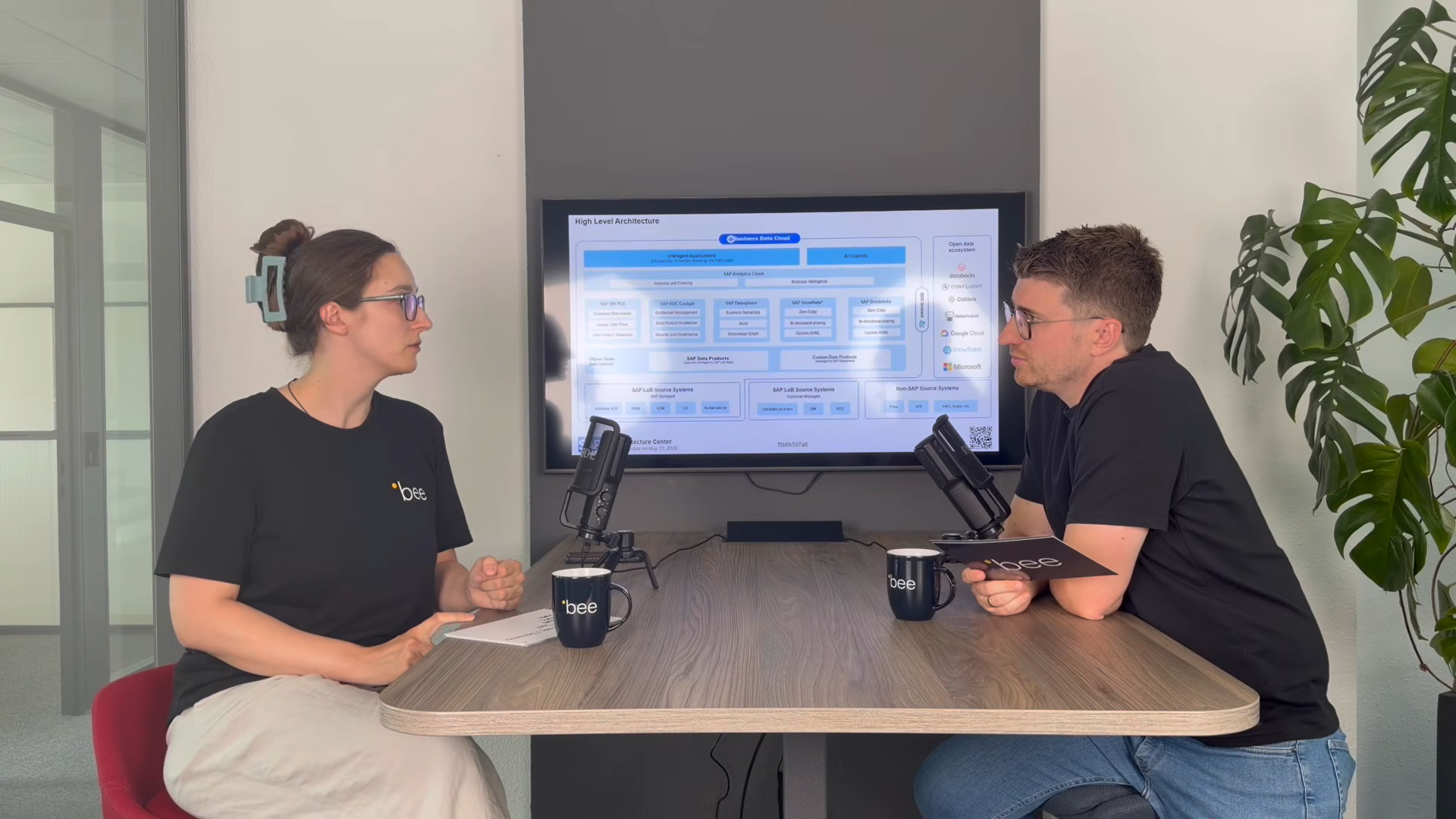
SAP Business Data Cloud
SAP Business Data Cloud: Plattform statt weiteres Tool
08.10.2026
|
SAP Cloud ERP

SAP Release-Upgrade bei Dallmayr
25.09.2026
|
Kundenreferenzen

Innovabee ist offizieller SAP-Concur-Implementierungspartner
16.09.2026
|
Innovabee