Dokumentationen und Schulungen für SAP S/4HANA
mit “SAP Enable Now” bequem erstellt


Marcus Prutzer
Consultant
<style>
/* Webflow Blog Styles */
:root {
--content-max-width: 1500px;
--bg-color: #ffffff;
--font-sans: Inter, sans-serif;
--font-display: 'Mona Sans', sans-serif;
--font-sans-stretch: normal;
--font-display-stretch: normal;
}
.blog-content {
font-family: var(--font-sans);
font-stretch: var(--font-sans-stretch);
color: #000000;
line-height: 1.2;
}
figcaption, .video-caption {
font-family: 'Mona Sans', sans-serif;
font-stretch: normal;
font-size: 0.875rem;
font-weight: 500;
font-style: normal;
color: #000000;
line-height: 1.5;
letter-spacing: 0;
margin: 0.5rem 0 0 0;
text-align: center;
}
/* Image Widths and Galleries */
.offset-block {
padding-left: 50px;
}
.blog-content h1, .blog-content h2, .blog-content h3, .blog-content h4, .blog-content h5, .blog-content h6 {
font-family: var(--font-display);
font-stretch: var(--font-display-stretch);
}
.blog-content p a, .blog-content li a, .blog-content .text-link {
color: #f0567f;
text-decoration: underline;
font-weight: 500;
transition: color 0.2s ease;
}
.blog-content p a:hover, .blog-content li a:hover, .blog-content .text-link:hover {
color: #f0567f;
}
.blog-content h1 {
font-family: 'Mona Sans Expanded', sans-serif;
font-stretch: 125%;
font-size: 48px;
line-height: 1.2;
margin: 0 0 1rem 0;
color: #000000;
font-weight: 700;
letter-spacing: 0;
}
.blog-content h2 {
font-family: 'Mona Sans Expanded', sans-serif;
font-stretch: 125%;
font-size: 36px;
line-height: 1.2;
margin: 0 0 0.75rem 0;
color: #000000;
font-weight: 500;
letter-spacing: 0;
}
.blog-content h3 {
font-family: 'Mona Sans', sans-serif;
font-stretch: normal;
font-size: 26px;
line-height: 1.2;
margin: 0 0 0.5rem 0;
color: #000000;
font-weight: 700;
letter-spacing: 0;
}
.blog-content h4 {
font-family: 'Mona Sans', sans-serif;
font-stretch: normal;
font-size: 23px;
line-height: 1.1;
margin: 0 0 0.75rem 0;
color: #000000;
font-weight: 700;
letter-spacing: 0;
}
.blog-content h5 {
font-family: 'Mona Sans', sans-serif;
font-stretch: normal;
font-size: 23px;
line-height: 1.1;
margin: 0 0 0.75rem 0;
color: #000000;
font-weight: 700;
letter-spacing: 0;
}
.blog-content h6 {
font-family: 'Mona Sans', sans-serif;
font-stretch: normal;
font-size: 20px;
line-height: 1.2;
margin: 0 0 0.75rem 0;
color: #000000;
font-weight: 700;
letter-spacing: 0;
}
.blog-content .kpi-text {
font-family: 'Mona Sans', sans-serif;
font-stretch: normal;
font-size: 2.125rem;
line-height: 1.2;
margin: 0 0 1rem 0;
color: #000000;
font-weight: 700;
text-align: center;
}
.blog-content p {
font-family: 'Mona Sans', sans-serif;
font-stretch: normal;
font-size: 20px;
margin: 0 0 1rem 0;
line-height: 1.2;
color: #000000;
font-weight: 500;
}
.blog-content .text-bodyBold {
font-family: 'Mona Sans', sans-serif;
font-stretch: normal;
font-size: 20px;
margin: 0 0 1rem 0;
line-height: 1.2;
color: #000000;
font-weight: 700;
}
.blog-content ul {
font-family: 'Mona Sans', sans-serif;
font-stretch: normal;
font-size: 20px;
margin: 0 0 1rem 0;
line-height: 1.2;
color: #000000;
font-weight: 500;
}
.blog-content p a, .blog-content li a, .blog-content h1 a, .blog-content h2 a, .blog-content h3 a, .blog-content h4 a {
color: #f0567f;
text-decoration: underline;
font-weight: 500;
transition: all 0.2s ease-in-out;
}
.blog-content p a:hover, .blog-content li a:hover, .blog-content h1 a:hover, .blog-content h2 a:hover, .blog-content h3 a:hover, .blog-content h4 a:hover {
color: #f0567f;
}
.blog-content blockquote {
font-family: 'Mona Sans', sans-serif;
font-stretch: normal;
font-size: 22px;
font-style: italic;
font-weight: 400;
border-left: 0px solid #0066cc;
background-color: #f2f5f8;
padding: 0px;
margin: 1.5rem 0;
color: #000000;
}
.blog-content q {
font-family: 'Mona Sans', sans-serif;
font-stretch: normal;
font-size: 20px;
font-style: italic;
font-weight: 400;
border-left: 0px solid #94a3b8;
background-color: #f2f5f8;
padding: 0px;
quotes: "«" "»" "‹" "›";
color: #000000;
}
.custom-container {
max-width: var(--content-max-width);
margin: 0 auto;
padding: 60px 60px 70px 70px;
}
.custom-button:hover {
background-color: #fdc300 !important;
color: #000000 !important;
transform: scale(1.03) !important;
}
.faq-item {
border: 1px solid #e0e0e0;
border-radius: 8px;
padding: 15px;
margin-bottom: 1rem;
}
.faq-question {
font-weight: bold;
color: #1a1a1a;
margin-bottom: 0.5rem;
}
.faq-answer {
color: #333333;
}
.box-style-standard {
background-color: #ffffff;
border: 1px solid #e5e7eb;
border-radius: 8px;
padding: 20px;
color: #333333;
margin: 1.5rem 0;
}
.box-style-info {
background-color: #eff6ff;
border: 1px solid #3b82f6;
border-radius: 8px;
padding: 20px;
color: #1e40af;
margin: 1.5rem 0;
}
.box-style-warning {
background-color: #fffbeb;
border: 1px solid #f59e0b;
border-radius: 8px;
padding: 20px;
color: #92400e;
margin: 1.5rem 0;
}
@media (max-width: 991px) {
.offset-block { padding-left: 20px; }
.blog-content h1 { font-size: 44px; }
.blog-content h2 { font-size: 34px; }
.blog-content h3 { font-size: 24px; }
.blog-content h4 { font-size: 22px; }
.blog-content h5 { font-size: 22px; }
.blog-content h6 { font-size: 19px; }
.blog-content p { font-size: 18px; }
.blog-content .text-bodyBold { font-size: 18px; }
.blog-content ul { font-size: 19px; }
.blog-content .kpi-text { font-size: 1.8rem; }
.blog-content blockquote { font-size: 21px; }
.blog-content q { font-size: 19px; }
figcaption, .video-caption { font-size: 0.875rem; }
.custom-container { padding: 40px 40px 40px 40px; }
}
@media (max-width: 767px) {
.offset-block { padding-left: 15px; }
.blog-content h1 { font-size: 38px; }
.blog-content h2 { font-size: 28px; }
.blog-content h3 { font-size: 22px; }
.blog-content h4 { font-size: 21px; }
.blog-content h5 { font-size: 21px; }
.blog-content h6 { font-size: 18px; }
.blog-content p { font-size: 16px; }
.blog-content .text-bodyBold { font-size: 16px; }
.blog-content ul { font-size: 18px; }
.blog-content .kpi-text { font-size: 1.5rem; }
.blog-content blockquote { font-size: 20px; }
.blog-content q { font-size: 18px; }
figcaption, .video-caption { font-size: 0.875rem; }
.custom-container { padding: 15px 15px 15px 15px; }
}
/* Blog Lightbox */
.blog-lightbox-trigger { text-decoration: none !important; }
.blog-lightbox-trigger img { transition: opacity 0.2s ease; }
.blog-lightbox-trigger:hover img { opacity: 0.85; }
.blog-lightbox-overlay {
position: fixed; top: 0; left: 0; width: 100%; height: 100%;
background: rgba(0,0,0,0.85); z-index: 99999; display: flex;
align-items: center; justify-content: center; cursor: zoom-out;
animation: blogLbFadeIn 0.2s ease;
}
.blog-lightbox-overlay img {
max-width: 90vw; max-height: 90vh; border-radius: 8px;
box-shadow: 0 20px 60px rgba(0,0,0,0.5); object-fit: contain;
}
@keyframes blogLbFadeIn { from { opacity: 0; } to { opacity: 1; } }
</style>
<div class="blog-content">
<section style="background-color: #f2f5f8; width: 100%; margin-top: 0px; margin-bottom: 20px;">
<div class="custom-container" style="background-color: transparent;">
<div class="offset-block">
<p style="text-align: left;">SAP S/4HANA bietet eine Fülle von bahnbrechenden Innovationen. Zwei Dinge sind aus meiner Sicht wichtig, damit Anwenderunternehmen diese Innovationen bestmöglich ausschöpfen können. Die Anwender müssen über das Wissen verfügen, die neue Lösung mit ihren umfassenden Möglichkeiten kompetent zu nutzen. Und sie müssen die Bereitschaft mitbringen, sich auf die neuen Funktionen und Geschäftsprozesse in SAP S/4HANA einzulassen – Stichwort: Benutzerakzeptanz.</p>
</div>
<figure style="text-align: center; margin: 1.5rem 0;"><a href="https://cdn.prod.website-files.com/68ffbb1d2a6455e8202f8d3e/69dc3e5f0ba0c2251af90328_Blogbeitrag_Screen_Enable-Now.png" class="blog-lightbox-trigger" onclick="event.preventDefault();var o=document.createElement('div');o.className='blog-lightbox-overlay';o.innerHTML='<img src="https://cdn.prod.website-files.com/68ffbb1d2a6455e8202f8d3e/69dc3e5f0ba0c2251af90328_Blogbeitrag_Screen_Enable-Now.png" alt="">';o.onclick=function(){this.remove()};document.body.appendChild(o)" style="display: block; cursor: zoom-in;"><img src="https://cdn.prod.website-files.com/68ffbb1d2a6455e8202f8d3e/69dc3e5f0ba0c2251af90328_Blogbeitrag_Screen_Enable-Now.png" alt="Dokumentationen und Schulungen für SAP S/4HANA mit “SAP Enable Now” bequem erstellt" class="blog-img-1d1b357d-0375-432e-b7e9-89a3cf7cc7a2" style="max-width: 100%; width: 100%; height: auto; border-radius: 8px; display: block; margin: 0 auto;"></a><figcaption>Dokumentationen und Schulungen für SAP S/4HANA mit “SAP Enable Now” bequem erstellt</figcaption></figure>
</div>
</section>
<section style="background-color: #f2f5f8; width: 100%; margin-top: 0px; margin-bottom: 20px;">
<div class="custom-container" style="background-color: transparent;">
<div class="offset-block">
<h2 style="text-align: left;">Lerninhalte einfach erstellen, verwalten und bereitstellen</h2>
<p style="text-align: left;">Mit „SAP Enable Now“ bietet SAP eine umfassende und intuitive Plattform für Wissensvermittlung, E‑Learning, Dokumentation und Simulation, mit der Anwenderunternehmen komfortabel neue Lerninhalte erstellen, verwalten und ihren Mitarbeitern zur Verfügung stellen können. „Enable Now“ ist SAPs strategische Lösung für Wissenstransfer. Sie ist direkt in SAP S/4HANA integriert und kann auch in Zusammenhang mit zahlreichen anderen SAP-Lösungen genutzt werden.</p>
<p style="text-align: left;">Ein Anwendungsbeispiel von vielen ist die Online-Hilfe in SAP S/4HANA. Sie wurde mit Hilfe von “SAP Enable Now” erstellt und kann damit auch individuell angepasst werden. </p>
</div>
</div>
</section>
<section style="background-color: #f2f5f8; width: 100%; margin-top: 0px; margin-bottom: 20px;">
<div class="custom-container" style="background-color: transparent;">
<div class="offset-block">
<h2 style="text-align: left;">Für jeden Bedarf das richtige Lernformat</h2>
<p style="text-align: left;">Die Lösung, die sowohl On-Premise als auch in der Cloud verfügbar ist, bietet dabei wesentlich mehr als nur vorgefertigte Lerninhalte. Unternehmen können damit eine Vielzahl von Formaten selbst erstellen: zum Beispiel Handbücher, Prozessdokumentationen, Testskripte, interaktive Demos, E‑Learning-Kurse oder Tests. Darüber hinaus bietet die Software kontextsensitive Hilfe durch Popup-Fenster direkt in der Anwendung. Anwender können also – je nach Situation und Bedarf – das für sie passende Lernformat auswählen.</p>
</div>
<figure style="text-align: center; margin: 1.5rem 0;"><a href="https://cdn.prod.website-files.com/68ffbb1d2a6455e8202f8d3e/69dc3e61fcb4011615a28691_Blogbeitrag_Grafik_Enable-Now.png" class="blog-lightbox-trigger" onclick="event.preventDefault();var o=document.createElement('div');o.className='blog-lightbox-overlay';o.innerHTML='<img src="https://cdn.prod.website-files.com/68ffbb1d2a6455e8202f8d3e/69dc3e61fcb4011615a28691_Blogbeitrag_Grafik_Enable-Now.png" alt="">';o.onclick=function(){this.remove()};document.body.appendChild(o)" style="display: block; cursor: zoom-in;"><img src="https://cdn.prod.website-files.com/68ffbb1d2a6455e8202f8d3e/69dc3e61fcb4011615a28691_Blogbeitrag_Grafik_Enable-Now.png" alt="Die vier Komponenten von SAP Enable Now helfen dabei, Lerninhalte schnell und einfach zu erstellen und bereitzustellen." class="blog-img-082ac030-4b53-4519-997b-0db2de0ba477" style="max-width: 100%; width: 100%; height: auto; border-radius: 8px; display: block; margin: 0 auto;"></a><figcaption>Die vier Komponenten von SAP Enable Now helfen dabei, Lerninhalte schnell und einfach zu erstellen und bereitzustellen.</figcaption></figure>
</div>
</section>
<section style="background-color: #f2f5f8; width: 100%; margin-top: 0px; margin-bottom: 20px;">
<div class="custom-container" style="background-color: transparent;">
<div class="offset-block">
<h2 style="text-align: left;">E‑Learnings und Prozessdokumentationen zu SAP S/4HANA einfach erstellen</h2>
<p style="text-align: left;">Auch bei der Bereitstellung zeigt sich SAP flexibel: Die Lerninhalte können über die Plattform von Enable Now, über Video- oder Wissensportale, als Testskript oder Hilfemenü ausgeliefert werden. Um eine solche Vielzahl von Formaten und Bereitstellungsoptionen zu ermöglichen, wird SAP Enable Now mit vier Komponenten ausgeliefert: dem Producer, dem Instant Producer, dem Manager und dem Navigator. Damit werden alle Phasen der Wissensvermittlung – vom formellen Lernen in Präsenztrainings und Online-Kursen über das Lernen in Eigeninitiative in Wissensportalen oder ‑datenbanken bis hin zu kontextsensitivem Lernen abgedeckt.</p>
</div>
<div style="text-align: center; margin: 1rem 0;">
<a href="https://www.sap.com/germany/products/enable-now.html" class="custom-button" style="
display: inline-block;
text-decoration: none;
font-size: 16px;
font-weight: 400;
font-style: normal;
color: #000000;
background-color: #fdc300;
border: 0px solid #000000;
border-radius: 30px;
padding: 8px 22px 8px 22px;
transition: all 0.2s ease-in-out;
font-family: 'Mona Sans', sans-serif;
font-stretch: 125%;
">Weitere Informationen zu SAP Enable Now »</a>
</div>
</div>
</section>
<section style="background-color: #f2f5f8; width: 100%; margin-top: 0px; margin-bottom: 20px;">
<div class="custom-container" style="background-color: transparent;">
<div class="offset-block">
<h2 style="text-align: left;">Die Vorteile von “SAP Enable Now” auf einen Blick</h2>
<ul style="padding-left: 1.5rem; list-style-type: disc;">
<li style="margin-bottom: 0.5rem;">Zeitersparnis bei der Erstellung von Dokumentationen und Schulungsunterlagen</li>
<li style="margin-bottom: 0.5rem;">flexibler Wissenserwerb in SAP-Projekten durch Online-Schulungen und Self-Service-Formate</li>
<li style="margin-bottom: 0.5rem;">schnelle Einarbeitung neuer Mitarbeiter</li>
<li style="margin-bottom: 0.5rem;">höhere Mitarbeiterproduktivität durch effektivere Ausbildung</li>
<li style="margin-bottom: 0.5rem;">Qualitätssicherung in der Endanwenderschulung durch Übungen und Tests</li>
<li style="margin-bottom: 0.5rem;">hohe Integration in SAP S/4HANA</li>
</ul>
</div>
</div>
</section>
</div>
Sie wollen keine News mehr verpassen? Dann abonnieren Sie unseren Newsletter:
Weitere Beiträge
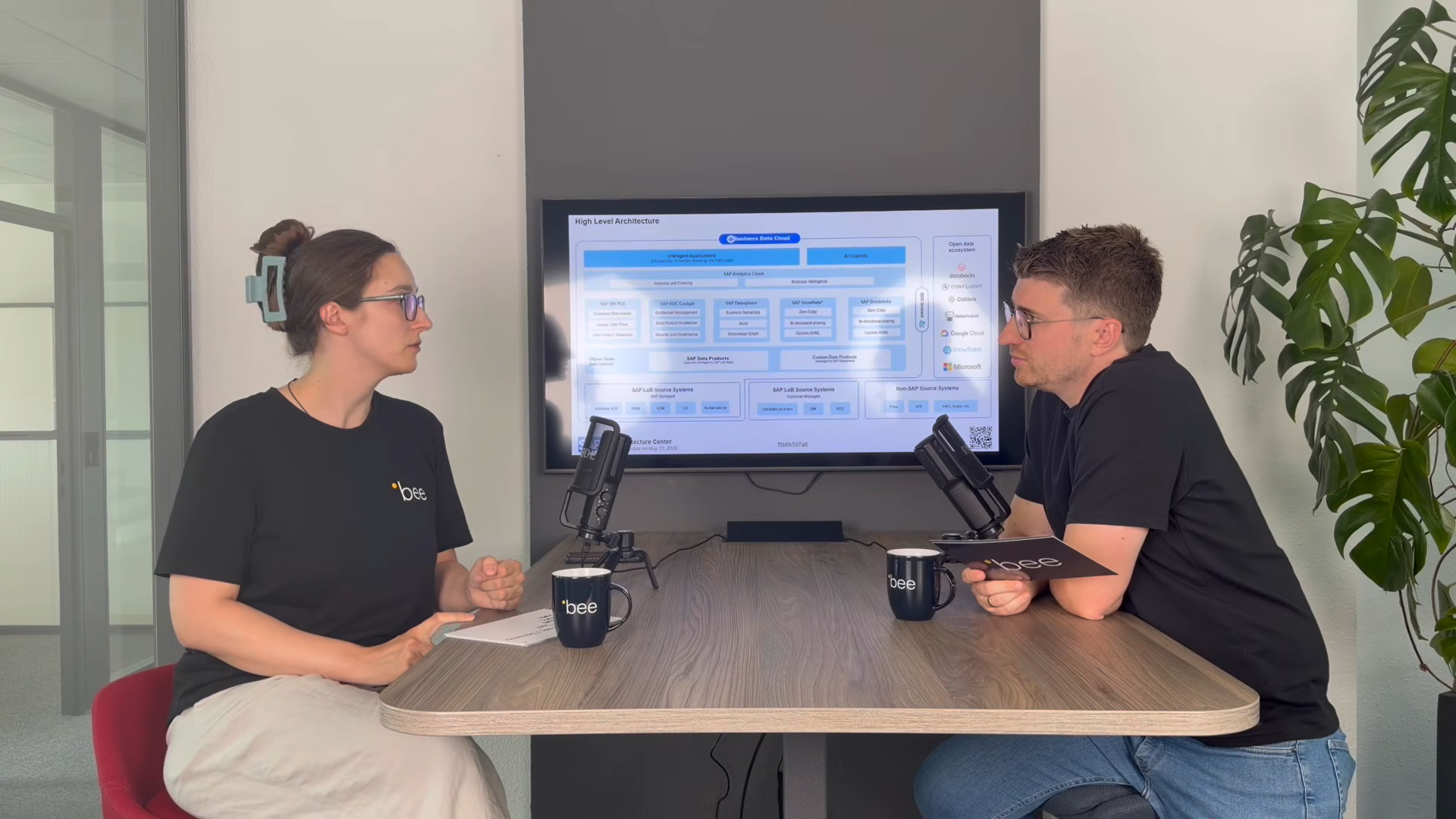
SAP Business Data Cloud
SAP Business Data Cloud: Plattform statt weiteres Tool
08.10.2026
|
SAP Cloud ERP

SAP Release-Upgrade bei Dallmayr
25.09.2026
|
Kundenreferenzen

Innovabee ist offizieller SAP-Concur-Implementierungspartner
16.09.2026
|
Innovabee